Buying a Clash of Clans Account Is Against Supercell’s Terms — Why People Do It Anyway
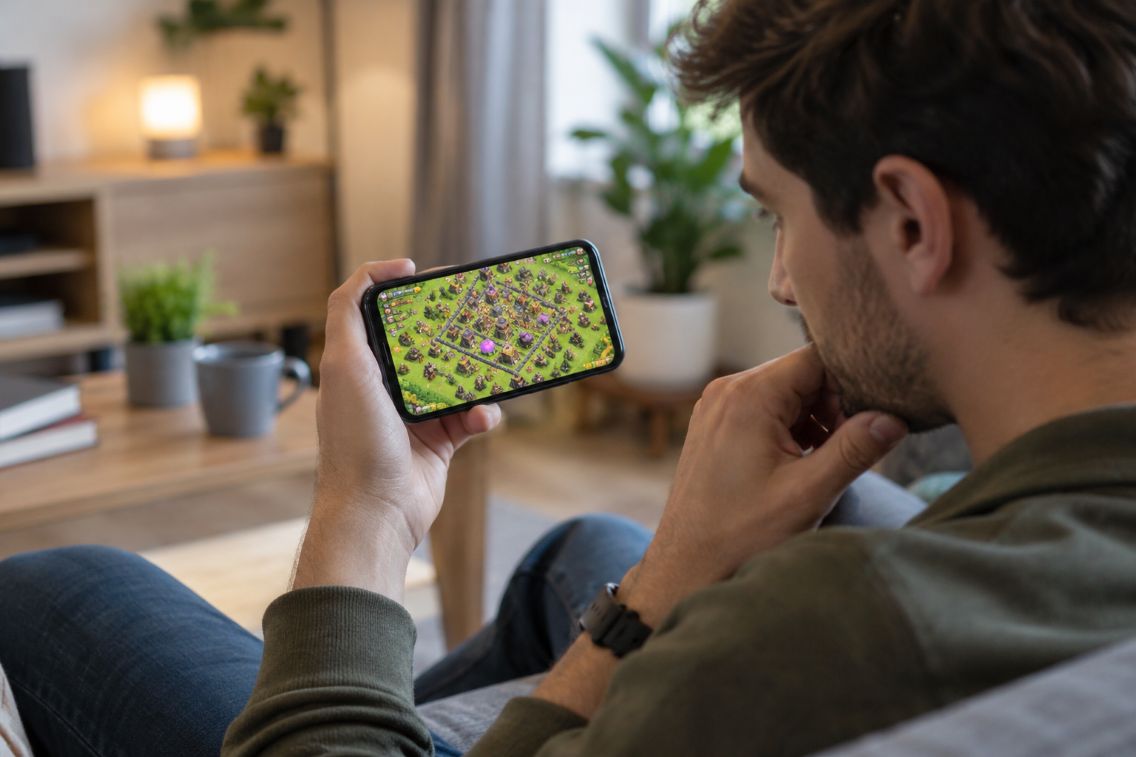
Supercell’s Terms of Service prohibit players from buying, selling, renting, or giving away their game accounts. The rule applies across the company’s games, including Clash of Clans. Supercell also states that accounts transferred between players can face penalties, including permanent closure.
Yet a market for established accounts continues to exist. Buying a Clash of Clans account is one way some players try to bypass the long process of developing a village from its earliest stages. That convenience creates a clear tension. A player can gain immediate access to years of progress, but the account remains subject to rules that do not recognize the sale as legitimate.
Why Does Supercell Prohibit Account Trading?
The official position is straightforward. Supercell grants players a limited, revocable, and non-transferable right to use its services. Its Terms specifically prohibit attempts to purchase or sell an account.
The company’s Safe and Fair Play Policy also explains the practical risks behind that rule. A seller might retain access after payment. The same account could be offered to several buyers. A buyer may also have no reliable way to know whether the account has previously been involved in conduct that could lead to a penalty.
There is another important issue: support. Supercell Support warns that it cannot guarantee the security of an account that has been sold or bought. It also states that spending additional money on a transferred account does not remove the possibility of permanent closure for violating the Terms.
From the developer’s perspective, therefore, ownership history matters. An account is not simply a collection of buildings, heroes, equipment, and resources that can freely change hands.
Why Are Players Still Interested?
The other side of the argument starts with time. Clash of Clans is built around gradual progression, a familiar feature of mobile strategy games where long-term development and resource decisions shape how players advance. Developing a village involves upgrading defenses, troops, heroes, buildings, and other features over an extended period.
For some players, that progression is the attraction. Starting with a basic village and watching it develop is part of the game. For others, the same process can become a barrier. A returning player may want access to higher-level gameplay without rebuilding years of progress. Someone joining experienced friends may have similar reasons for wanting a developed base.
This helps explain why a secondary market can exist even when the game’s publisher expressly prohibits account transfers. The product being offered is effectively saved time. Buyers are paying for access to progress someone else has already completed.
Can Marketplace Protections Remove the Risk?
Third-party marketplaces have developed systems designed to address some of the commercial risks surrounding these transactions. These protections, however, are separate from the rules imposed by the game developer.
For example, igitems says sellers must complete identity and address verification before listing. The marketplace also describes a payment-hold process in which funds are retained while a buyer checks whether the delivered account matches its listing.
If a problem occurs, igitems provides a dispute process. Its published policy says funds can be held while a dispute is active, with cases potentially escalating to platform staff when buyers and sellers cannot resolve them directly. The marketplace also advertises warranty protection for certain account-related problems.
These systems can address issues such as non-delivery, inaccurate descriptions, or attempts by a seller to recover an account. They cannot change Supercell’s Terms of Service. A marketplace warranty is a commercial arrangement between the marketplace and its users. It is not approval from the game’s developer.
How Real Is the Suspension Risk?
The possibility should be separated from claims about its frequency. Supercell clearly reserves the ability to penalize transferred accounts. Its support guidance says bought accounts may be permanently closed, and its broader fair-play rules include temporary suspensions and permanent account closures among possible penalties for misconduct.
igitems, meanwhile, characterizes enforcement against traded accounts as extremely rare in practice and says such action generally affects the traded account. That is the marketplace’s own description of enforcement experience, not a statistic published or confirmed by Supercell.
There is therefore no reliable public percentage that tells a buyer exactly how likely a purchased Clash of Clans account is to be suspended. Treating the risk as zero would conflict with the developer’s published rules. Assigning a precise probability without independent data would be equally misleading.
What Is a Player Actually Trading Off?
The debate ultimately comes down to certainty versus convenience. Buying an established account can remove much of the time needed to reach advanced stages of the game. Marketplace verification, payment holds, warranties, and dispute systems may also reduce some transaction risks.
But those protections operate outside Supercell’s account rules. They cannot make a transferred account compliant with the Terms of Service, guarantee continued access, or require Supercell to recognize the transaction.
That distinction is the most useful way to view the secondary market. Players are not simply comparing the price of an account with the value of its heroes, upgrades, or resources. They are exchanging time saved for additional uncertainty.
For some, skipping years of progression explains the appeal. For others, the possibility of losing access makes starting and developing their own village the more predictable route. Either way, the trade-off should be understood before money changes hands: marketplace protections may reduce problems between buyer and seller, but they do not remove the separate risk created by violating the game’s Terms of Service.


